TOURMALINES
Tourmaline- Species
- Elbaite
- Locality
- Brazil
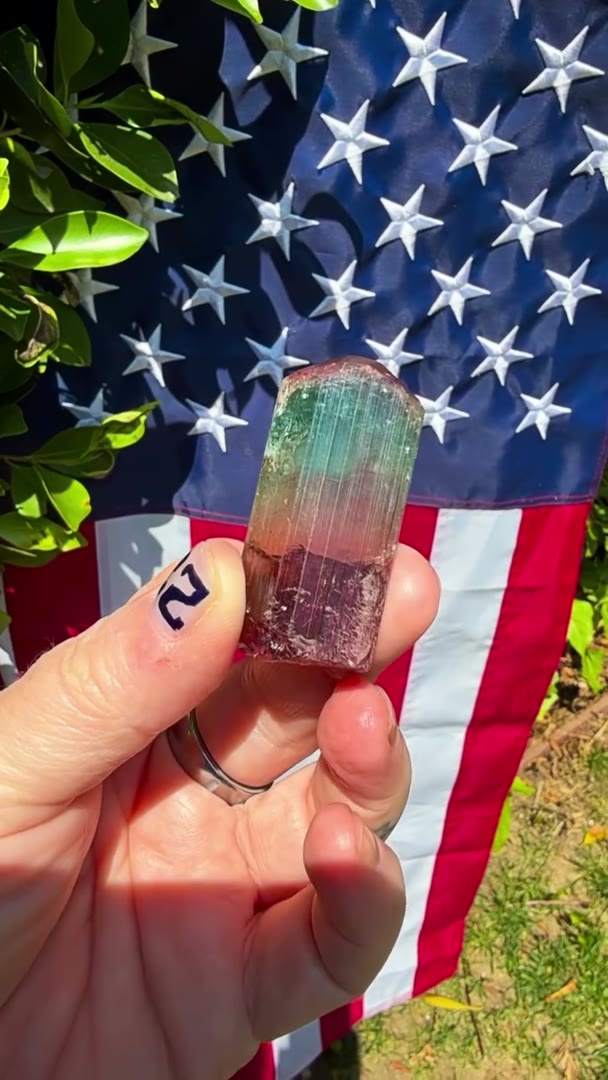
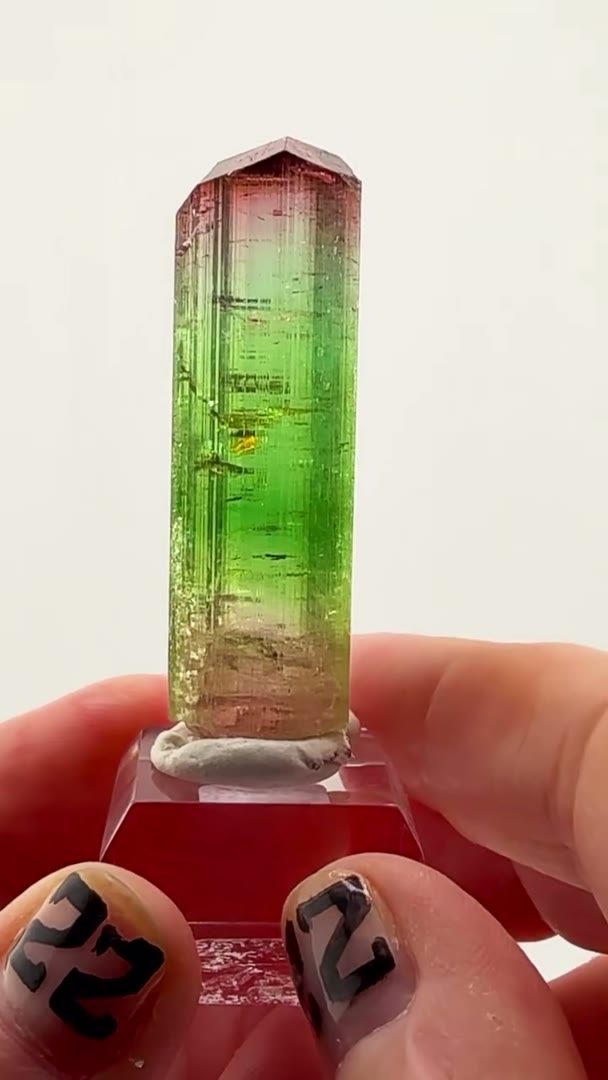
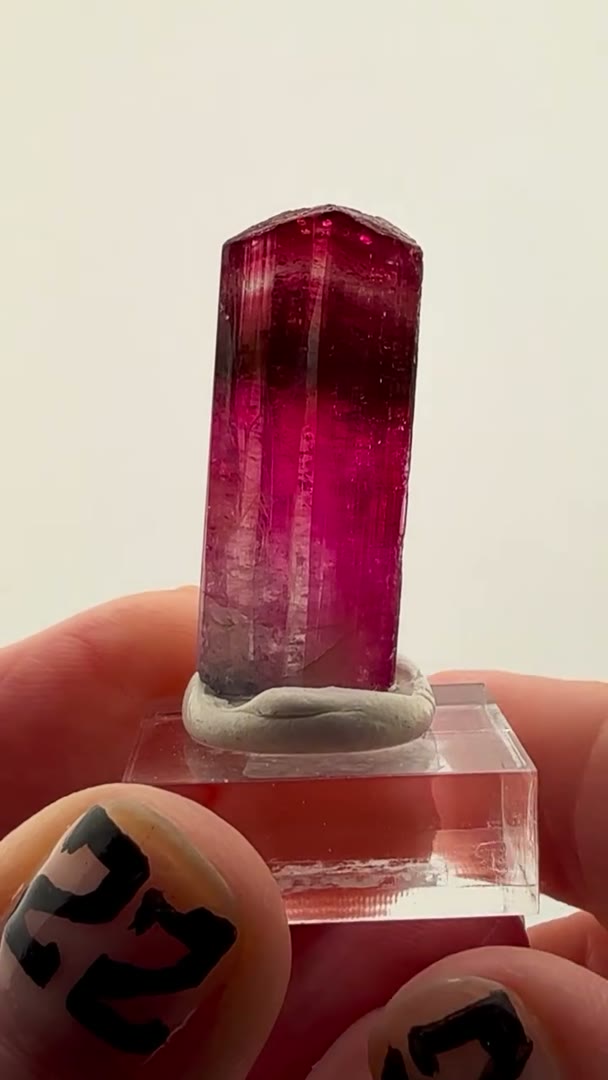
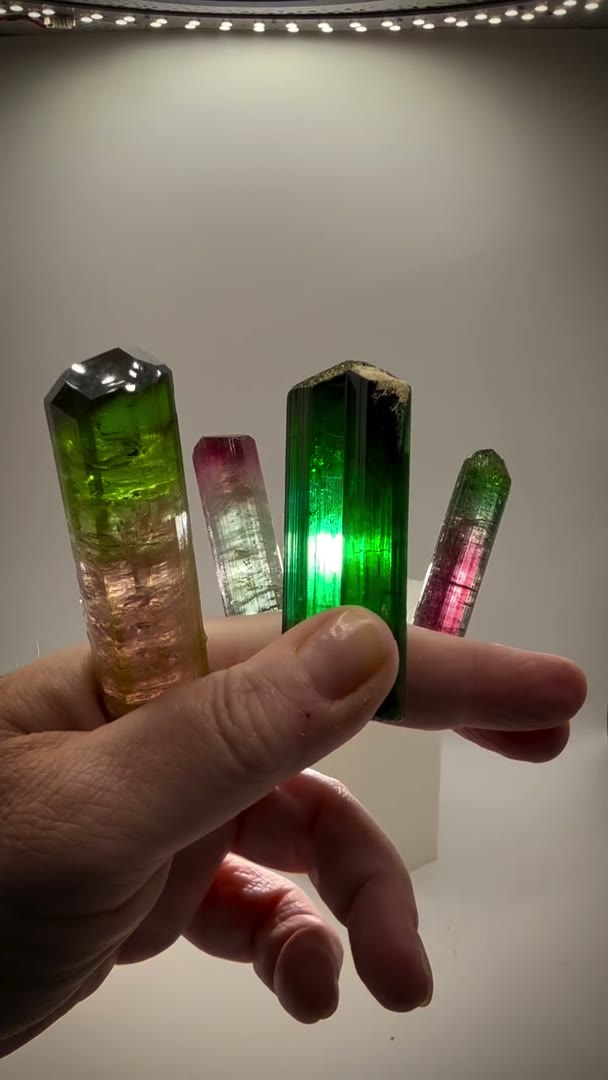
TOURMALINES Available for collection… Tourmaline is a complex boron silicate mineral group known for its,,incredible range of colors, often appearing in vibrant pinks, greens, and blues within a single crystal. With a hardness of 7–7.5 on the Mohs scale, they are durable for daily wear. These crystals are pyroelectric and piezoelectric, generating charges when heated or pressured. Natural History Museum of Utah Natural History Museum of Utah +5 Key Characteristics and Varieties Colors: Ranging from black (Schorl) to deep red (Rubellite), green (Verdilitis/Chrome), and blue (Indicolite). Unique Features: “Watermelon” tourmaline features a pink center with a green outer ring. They are famous for their 3-sided, rounded triangular cross-sections and vertical striations on crystal faces. Structure: Trigonal crystal system. Species: Major species include Elbaite (most common in gem colors), Liddicoatite, Dravite, Uvite, and Schorl. Natural History Museum of Utah Natural History Museum of Utah +5 Origins and History Name Origin: Derived from the Sinhalese word “turmali,” meaning “mixed colors,” used by Dutch traders for Sri Lankan gems. History: An ancient Egyptian legend claims tourmaline broke through a rainbow, gaining its many colors. Sources: Major mining locations include Brazil, Africa, and the United States (Maine and California). AGTA AGTA +2 Gemstone Care Durability: Suitable for daily wear, but should be treated with care. Cleaning: Use warm, soapy water and a soft brush; avoid ultrasonic and steam cleaners as these can cause damage. Treatments: Some darker stones are heated to lighten color, but many are untreated. Angara Angara +1 Metaphysical Beliefs Often referred to as a “stone of reconciliation,” believed to enhance empathy, balance, and provide protection against negative energy.
Interested in this piece?
Reach out via Instagram or email for pricing and availability.
Link to this piece copied
- Open the DM with the button below.
- Paste it as your first message — hold the message box and tap Paste (on a computer: ⌘V / Ctrl+V).
- Send it. Jon replies with the price and details.
Lost it? Tap the line above to copy it again.
Prefer email? Ask about this piece →